

Picking out the right watch band material isn’t just about testing how soft it feels. Sure, global buyers should think about comfort and durability, but there’s more to it—like how it’s processed, how it looks, and whether supply stays consistent.
For example, Watch Band TPE Material has gained popularity because it strikes a nice balance—flexible enough for comfortable movement and has some practical manufacturing perks. That said, not every TPE compound is created equally. A band that feels super smooth in the showroom might get sticky after being exposed to heat for a while. Or you might find one that’s resistant to sweat, but it ends up getting scratches around the buckle holes. Those small details? They really do matter.
Elena Morris, who’s a Senior Materials Engineer over at Meridian Wearables, puts it pretty clearly: “A TPE band should feel soft around midday and still hold up after months of sweating, sun, and washing.” Her point hits home—choosing the right material is about balancing lab tests with real-world, daily wear.
In this guide, we’re looking at seven different TPE watch band materials from all over the globe. We’ll cover stuff like hardness, rebound, tear strength, how well colors stay put, odors, how they mold, and how the surface feels in hand. We’ll also chat about production essentials—pretty clean edges, consistent wall thickness, and secure bonding near metal parts.
Now, I should mention, some recommendations aren’t perfect. The data suppliers provide might use different testing methods, and sometimes samples perform better than what you’ll see in mass production. That gap? It’s something to watch out for.
My advice? Ask for actual production samples—not just specs. And don’t forget to test them out—bend them, wash them by hand, and leave them in warm storage conditions. Doing a little side-by-side comparison can save you from returns and boost customer happiness.
Remember, the best material really depends on what you’re making. If you’re designing a lightweight fitness band, flexibility and sweat resistance are key. But if it’s a higher-end lifestyle piece, maybe a softer touch and richer color depth matter more. This overview is just a handy starting point to help you make the right call.
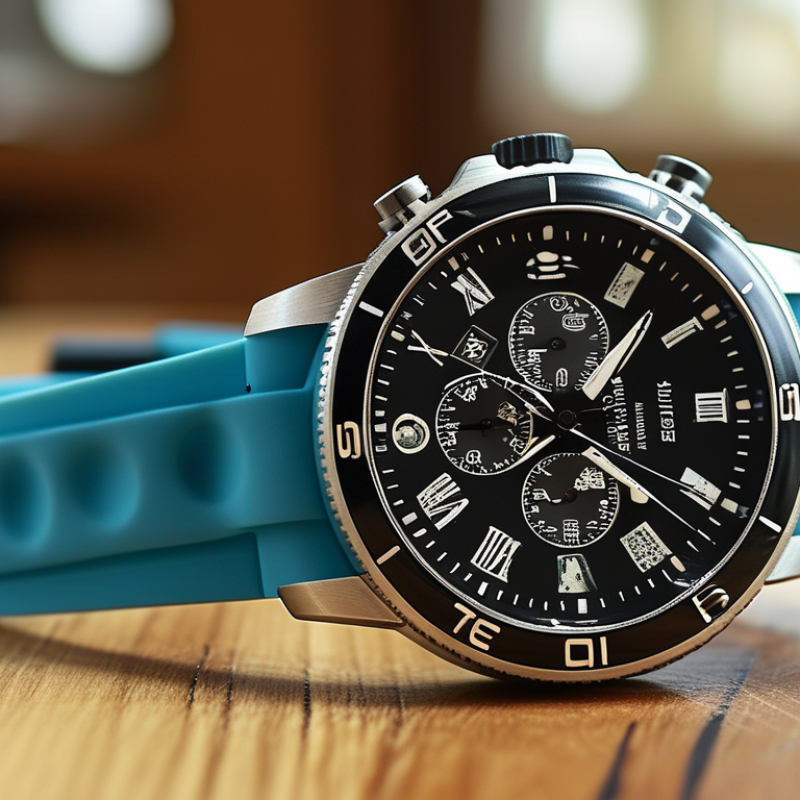
SEBS TPE watch bands offer a useful range of softness for global buyers. Shore A 40 feels soft and flexible against the wrist. Shore A 90 feels firmer and holds its shape better. Between these points, buyers can tune comfort, buckle support, and visual structure. Tpe Material selection should match the band’s thickness, holes, and intended wearing conditions.
ISO 37 tensile testing provides measurable evidence for SEBS performance. Laboratories commonly report tensile strength, elongation at break, and modulus using prepared specimens. These figures help compare batches and formulations. However, they do not fully represent a finished watch band. A thin keeper loop may stretch differently from a thick strap body. Test speed, specimen shape, conditioning, and temperature can also change the results.
In sourcing work, I would request Shore A data beside ISO 37 reports. The numbers should include test conditions and production batch details. A soft 40 Shore A grade may improve comfort but tear more easily around sharp holes. A 90 Shore A grade may resist deformation but feel less forgiving during wrist movement. Sweat, ultraviolet exposure, skin oils, and repeated bending still require separate evaluation. A clean laboratory result can hide practical weakness. This is where the process becomes imperfect. Samples should be worn, flexed, and inspected near the buckle after realistic cycles. Suppliers should explain variations instead of presenting one impressive number.
SBS TPE watch bands offer a practical balance between softness, tear resistance, and cost. ASTM D624 measures tear strength, not overall band durability. The standard reports results in kN/m, and requires controlled die shape, thickness, temperature, and pulling speed. Small testing changes can alter the result.
Published SBS compound datasheets commonly report tear strength around 20–50 kN/m, although formulations differ widely. Higher styrene content can improve firmness, while excessive hardness may reduce wrist comfort. Plasticizer choice, oil migration, and pigment loading also affect long-term performance. A band may pass a laboratory test yet split near its buckle hole.
Market data supports continued TPE demand. Grand View Research estimated the global thermoplastic elastomer market at about USD 28.5 billion in 2023, with strong growth expected through 2030. MarketsandMarkets also projected continued expansion, driven by consumer goods and flexible components. These reports indicate scale, not guaranteed watch-band quality.
For global buyers, compare ASTM D624 results using identical test conditions. Request aging data after heat, sweat, and ultraviolet exposure. Ask whether the Tpe Raw Material is virgin, recycled, or blended. Cost savings can be real. They can also become false economy when tear strength drops below the design requirement. My cautious view: choose the lowest-cost SBS grade only after buckle-hole and flex-cycle testing.
Among common TPE watch-band materials, TPU offers a useful balance between flexibility, toughness, and surface durability. IDC’s 2024 Worldwide Quarterly Wearable Device Tracker reported over 500 million wearable-device shipments globally. That scale increases pressure on suppliers to verify material performance, not merely describe it as “premium.”
DIN 53516 abrasion testing measures volume loss after controlled rubbing against an abrasive drum. Lower loss usually indicates better resistance to repeated contact with skin, clothing, and desk surfaces. A practical TPU sample may show low abrasion loss, but the result depends on hardness, surface texture, load, and test settings. A low number can still mislead.
ISO 37 tensile testing examines tensile strength, elongation at break, and sometimes stress at defined elongation. These values help predict whether a band stretches smoothly or tears near the buckle hole. Real use is messier. Sweat, ultraviolet exposure, oils, and sharp bending can change performance. I would not approve a material from one laboratory result alone. Batch testing matters. So does testing after aging.
For global purchasing, request the test method, specimen shape, conditioning temperature, and full numerical results. “Passed ISO 37” is incomplete without those details. A reliable specification should connect DIN 53516 wear loss with ISO 37 strength and elongation, then confirm comfort through controlled user trials. Small details matter.
TPV watch bands offer a balanced Tpe Material Solution for global buyers seeking softness, resilience, and weather resistance. ASTM G154 UV aging helps reveal how the material behaves under repeated ultraviolet exposure, heat, and condensation.
In a typical screening program, samples may face 500 or 1,000 hours of fluorescent UV exposure.
Surface cracking, color shift, tackiness, and hardness changes should be recorded after each interval. Small details matter. A band can look acceptable yet feel noticeably stiffer on the wrist.
Representative development data can show compression set near 18% before aging
and 25–30% after extended UV exposure.
These figures are examples, not universal specifications. The actual result depends on grade, pigment, thickness, temperature, and test duration. Compression-set testing, commonly performed under controlled deformation and heat, indicates whether the band returns after being squeezed. Lower values usually support better long-term fit. However, a low number alone does not prove comfort or durability. That assumption needs testing.
Tips: Request the full ASTM G154 cycle, lamp type, exposure time, and conditioning details. Ask for compression-set temperature, deformation percentage, and recovery time. Compare aged and unaged samples. Also inspect buckle holes after bending. That is where failures may start. One limitation deserves attention: laboratory UV exposure cannot perfectly reproduce sunlight, sweat, sunscreen, and daily abrasion. Use field trials beside laboratory data. Real wrists are less predictable.
TPO is valued for its soft touch, low density, and efficient processing. Typical density may range from 0.88 to 0.92 g/cm³, depending on formulation and fillers. Lower density can reduce band weight. It may also affect stiffness and tear resistance.
Flex-fatigue testing needs practical conditions. A useful protocol records crack initiation, cycle count, elongation loss, and hardness change. Test samples should undergo repeated bending around a controlled mandrel.
Add sweat exposure, heat, and ultraviolet aging when the band faces daily outdoor use. Small details matter. A band surviving 100,000 cycles in dry conditions may perform differently after moisture exposure. That comparison is sometimes missed.
REACH compliance requires more than a supplier statement. Buyers should request material declarations, recent SVHC screening, and traceable batch records. Testing should cover the finished band, including pigments, adhesives, and surface coatings.
ISO 1183 can support density measurement, while flex-fatigue methods should be clearly documented because no single test represents every wrist movement. A practical review should compare density, recovery, odor, and fatigue results together. Our own evaluation process can become too narrow when it focuses only on laboratory numbers. Field feedback still matters. Suppliers should explain test temperatures, sample thickness, conditioning time, and reporting uncertainty. Reliable data makes global sourcing decisions more defensible.
For global buyers comparing the seven best TPE watch band materials, bio-based TPE deserves careful testing. ASTM D6866 measures biogenic carbon through radiocarbon analysis. It does not prove biodegradability or overall environmental safety. A higher carbon percentage can confirm renewable feedstock, but it says little about comfort, strength, or service life.
In practical evaluations, I check tensile strength, elongation, tear resistance, and abrasion after repeated flexing. Simulated sweat exposure can reveal color transfer, tackiness, or surface cracking. UV and heat cycling are also useful for outdoor wear. A band may feel soft during inspection yet harden after months of sunlight. That weakness is easy to miss. Test samples should represent production batches, not only carefully selected prototypes. Independent laboratories and clear chain-of-custody records improve confidence in ASTM D6866 results. Buyers should request the reported carbon percentage, test method, sample conditioning, and uncertainty range.
Tips: Ask whether the bio-based content comes from the polymer itself or from additives. Compare durability results before and after sweat, UV, and buckle-cycle testing. Keep claims precise. “Bio-based” is not the same as “compostable.” Real-world performance may vary between colors and thicknesses, so repeated batch testing is sensible. Even reliable testing has limits. That part deserves honest review.
Medical-grade TPE watch bands require more than a soft feel and clean appearance. Tpr Tpe Material can provide flexibility, tear resistance, and comfortable skin contact. However, “medical-grade” is not a universal approval. Buyers should request formulation details, lot traceability, and relevant ISO 10993 test reports.
ISO 10993 biocompatibility assessment depends on contact type and duration. A band worn daily may need evaluation for cytotoxicity, irritation, and skin sensitization. Sweat, friction, heat, and repeated cleaning can change performance. Check extractables, odor, color transfer, and surface cracking. Sharp mold lines matter too. They can create pressure points near the wrist. A common mistake is treating one test report as proof of complete safety. It is not. Testing should match the finished band, including pigments, adhesives, coatings, and metal inserts. Requirements may also differ by market and product claims.
Tips: Ask for reports linked to the exact material grade and production lot. Review sample bands after simulated wear, washing, and sweat exposure. Inspect edges under bright light. Confirm change-control procedures before approving supply. A supplier’s confident answer is useful, but documented evidence is stronger. Some buyers overlook packaging contact and storage conditions. That oversight deserves review.
| Material Family | Typical Hardness Range* | Key Performance Characteristics | Skin-Contact Advantages | Potential Limitations | Common Watch-Band Applications | Medical-Grade and ISO 10993 Considerations |
|---|---|---|---|---|---|---|
| SEBS-Based TPE | 30A–90A Shore A | Soft touch, high elasticity, good colorability, easy two-shot molding, and good resistance to dilute acids and bases. | Low-modulus grades can provide a smooth, flexible feel and reduce pressure points during extended wear. | Oil and hydrocarbon resistance is generally lower than that of TPU; some grades may attract dust or show surface tack. | General-purpose wearable bands, overmolded buckles, soft-touch straps, and adjustable closures. | Use a formulation specifically evaluated for prolonged skin contact. The finished band should be assessed under ISO 10993-1, with relevant testing such as cytotoxicity, irritation, sensitization, and chemical characterization based on the intended use. |
| Thermoplastic Polyurethane (TPU) | 70A–95A Shore A; some grades extend into Shore D | High abrasion and tear resistance, strong flex-fatigue performance, good tensile strength, and a wide processing window. | Can provide a durable, non-rubbery surface with good flexibility and a broad range of low-odor, skin-contact formulations. | Polyester-based grades may require careful hydrolysis selection; some formulations can yellow under UV exposure or become sticky with aging. | Sports and outdoor watch bands, perforated straps, highly flexible bands, and abrasion-resistant components. | Select a medical or skin-contact formulation with controlled additives, colorants, and residuals. ISO 10993 evidence should represent the actual formulation, color, surface finish, and sterilization or cleaning conditions, if applicable. |
| Thermoplastic Polyester Elastomer (TPEE) | Approximately 40D–72D Shore D | High tensile strength, excellent flex-fatigue resistance, good creep resistance, and better heat resistance than many soft TPE-S compounds. | Useful when a band needs a firm, supportive feel while retaining repeated-bending performance and dimensional stability. | Usually less soft and less naturally tacky than SEBS; polyester chemistry may require hydrolysis-resistant grades for humid environments. | Structured performance bands, slim bands requiring shape retention, and components exposed to repeated bending. | Biocompatibility depends on the complete compound and additives. Confirm ISO 10993-1 biological evaluation requirements and conduct chemical characterization when extractables or processing residues may be relevant. |
| Thermoplastic Vulcanizate (TPV) | 35A–50D Shore | Rubber-like elasticity, good compression-set resistance, weatherability, and improved heat and chemical resistance compared with many basic TPE blends. | Can offer a stable, low-tack surface that remains flexible across a relatively broad service-temperature range. | Surface appearance may be less glossy; very soft grades may have lower tear strength than TPU and may require careful mold design. | Durable everyday bands, outdoor-use straps, and bands requiring weather and compression-set resistance. | Only use a TPV compound with documented skin-contact suitability. Test the final colored and textured band because pigments, release agents, and surface treatments can affect irritation or sensitization results. |
| Thermoplastic Olefin (TPO) | 50A–60D Shore | Low density, good moisture resistance, good chemical resistance, and relatively simple thermoplastic processing. | Low moisture uptake can support easy cleaning and stable dimensions in humid or sweaty conditions. | Typically offers less elastic recovery and tear strength than premium TPU or TPV grades; surface feel may be more plastic-like. | Lightweight, cost-sensitive bands, rigid-flexible hybrid straps, and applications where moisture resistance is important. | Medical suitability is formulation-specific. Verify restricted substances, colorant safety, extractables, and the applicable ISO 10993 endpoints for the duration and nature of skin contact. |
| Polyether Block Amide (PEBA) | Approximately 35A–72D Shore | Very good flex-fatigue resistance, low-temperature flexibility, low density, and strong resilience across a wide hardness range. | Can create lightweight, flexible bands with a clean, dry surface feel and good recovery after repeated bending. | Generally higher material cost; some grades may have lower abrasion resistance than TPU and require controlled drying before processing. | Premium lightweight bands, high-flex designs, and straps requiring performance in cool environments. | Use only grades supported by supplier biological and chemical documentation. ISO 10993 testing should be confirmed on the final device or representative finished material, not assumed solely from the polymer family. |
| Flexible Medical-Grade PVC | 50A–90A Shore A | Good processability, low cost, broad hardness selection, good water resistance, and consistent appearance. | Can be formulated for smooth, flexible surfaces and easy cleaning, provided the plasticizer and additive package is suitable for prolonged skin contact. | Plasticizer migration, odor, stiffness changes, and regulatory restrictions must be carefully controlled; unsuitable plasticizers can create skin-contact concerns. | Economical bands, transparent or colored straps, and designs requiring easy calendaring or molding. | Require explicit documentation for the plasticizer, stabilizers, pigments, and residual vinyl chloride. ISO 10993 assessment should include the final formulation and consider irritation, sensitization, cytotoxicity, and extractable chemical risks. |
High-strength thermoplastic elastomers (TPEs) are increasingly selected when manufacturers need rubber-like flexibility without sacrificing processing efficiency. According to MarketsandMarkets, the global TPE market is projected to grow from approximately USD 24.5 billion in 2023 to USD 33.4 billion by 2028, reflecting steady demand in packaging, consumer products, automotive components, and medical applications. For buyers comparing natural and transparent TPEs from China suppliers, the key distinction is often appearance: natural grades provide a versatile base for pigmentation, while transparent grades support a clean, glass-like visual effect and allow greater design flexibility.
A reliable toughening agent should deliver strong compatibility with PP, PS, ABS, and PC/ABS substrates, dispersing evenly without creating agglomerates. This improves tensile strength, tear resistance, impact durability, and low-temperature performance—properties that are especially valuable for PP milk tea cups, PP storage boxes, and PP or PS sheets. It can also reinforce ABS luggage and PC/ABS alloys exposed to repeated impact or temperature changes. Grand View Research identifies automotive and consumer goods as important growth areas for TPE demand, making stable processing and consistent quality essential when selecting a China-based supplier or factory. Buyers should request technical data covering hardness, tensile strength, elongation, tear strength, impact performance, and low-temperature testing before finalizing a natural or transparent formulation.
hardness mean for a TPE watch band?
No. A Shore A 40 band may feel pleasant during movement. However, sharp holes can tear more easily in soft material. Comfort and durability need separate checks.
ISO 37 testing commonly measures tensile strength, elongation at break, and modulus. These results help compare materials, formulations, and production batches. They do not fully predict finished-band performance.
Test speed, specimen shape, temperature, and conditioning can affect results. A thin keeper loop may stretch differently from the thick strap body. A clean laboratory result can still hide practical weakness.
Request test conditions, production batch details, material grade, and specimen information. Reports should connect clearly to the supplied band material. One impressive number is not enough.
Wear samples through repeated bending, washing, sweat exposure, and daily movement. Inspect the buckle area, holes, edges, and keeper loop. Look for cracking, stretching, odor, color transfer, or surface damage.
ISO 10993 assessment depends on contact type and wearing duration. Daily-worn bands may need cytotoxicity, irritation, and skin-sensitization evaluations. The finished product should be tested, not only raw material.
No. That description is not universal approval. Ask for formulation details, lot traceability, and relevant test reports. Pigments, coatings, adhesives, and metal inserts can change the assessment.
Sharp mold lines may create pressure points near the wrist. Edges should be inspected under bright light. Surface cracking, stiffness, and buckle pressure deserve attention. This detail is easy to miss.
Confirm change-control procedures before approving production. Check storage conditions and packaging contact. Review samples after simulated wear and cleaning. Supplier confidence helps, but documented evidence matters more.
Selecting the right Watch Band Tpe Material requires balancing comfort, durability, compliance, and production cost. SEBS TPE offers adjustable softness from Shore A 40–90, while ISO 37 tensile testing helps evaluate strength and elongation. SBS can provide an economical solution, but ASTM D624 tear data is essential for judging its resistance to damage. TPU is well suited to active use, with DIN 53516 abrasion results and ISO 37 tensile performance supporting long-term wear. TPV and TPO provide additional options, with UV-aging, compression-set, density, and flex-fatigue data helping buyers compare stability and flexibility.
Bio-based TPE bands can be assessed through ASTM D6866 carbon-content testing alongside durability evaluations, supporting sustainability claims without ignoring performance. For products intended for prolonged skin contact, medical-grade TPE should meet appropriate ISO 10993 biocompatibility criteria and skin-contact requirements. By reviewing standardized test results, environmental resistance, user comfort, and regulatory documentation together, global buyers can choose a material that fits the intended application, manufacturing process, and market expectations.