





0102030405
High-Rigidity Engineering Plastics: PA66/6-GF60 for EV Battery Pack Components
2026-09-08
As the global new energy vehicle (NEV) industry enters a phase of intense competition in battery energy density and lightweighting, the logic for selecting component materials is being completely redefined. The requirement is shifting from "merely functional" to a demanding combination of high rigidity, hydrolysis resistance, dimensional stability, and long‑term creep resistance.
Traditional metal inserts, standard nylon, and even some PA6‑GF60 materials have frequently shown weaknesses in the humid, thermally cycling, and continuously loaded environment around battery packs. Common issues include significant strength loss after moisture absorption and susceptibility to creep under sustained clamping force.
NINGBO LOSMAN TRADING CO., LTD., leveraging nearly two decades of experience in supply chain integration and technical expertise within the engineering plastics sector, is proud to introduce its 60% Glass‑Fiber Reinforced PA66/6 Copolymer (PA66/6‑GF60) material series to the market. This material is specifically engineered for critical "metal‑to‑plastic" replacement applications in new energy vehicle battery pack components, high‑voltage connector brackets, and floating nut retainers. It effectively addresses material failure challenges in high‑humidity, high‑vibration, and long‑service‑life scenarios.
Ⅰ. Why Do Battery Pack Components Require "Specialty‑Grade" Nylon?
Currently, components within mainstream battery pack structures—such as cooling plate brackets, module fixing clips, and high‑voltage connector housings—are rapidly transitioning from metal stampings to injection‑molded parts. However, engineers face a core dilemma: standard PA6‑GF60 shows a marked decrease in strength after moisture absorption and is prone to creep under long‑term stress, while even pure PA66‑GF60 may lack sufficient dimensional stability in damp‑heat cycles.
The PA66/6 copolymer‑GF60 addresses this ingeniously. Through copolymer modification, it significantly enhances hydrolysis resistance and dimensional stability while maintaining the high rigidity close to that of pure PA66. This material offers a tensile modulus of up to 20,000 MPa, tensile strength exceeding 240 MPa, and a heat deflection temperature (at 1.8 MPa) of 250°C. More importantly, its superior creep resistance compared to PA6‑GF60 ensures that components like plastic cage nuts or brackets experience less clamping force decay over the 8‑to‑10‑year lifespan of a battery pack, substantially reducing the risk of loosening.
II. A Key Application: Plastic Floating Nut Holders and Fasteners
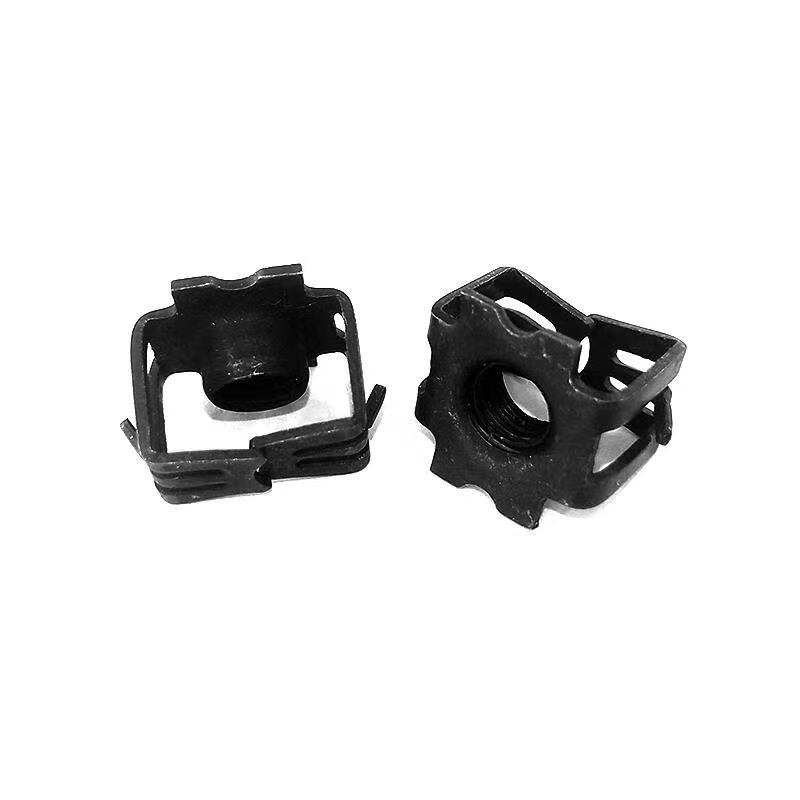
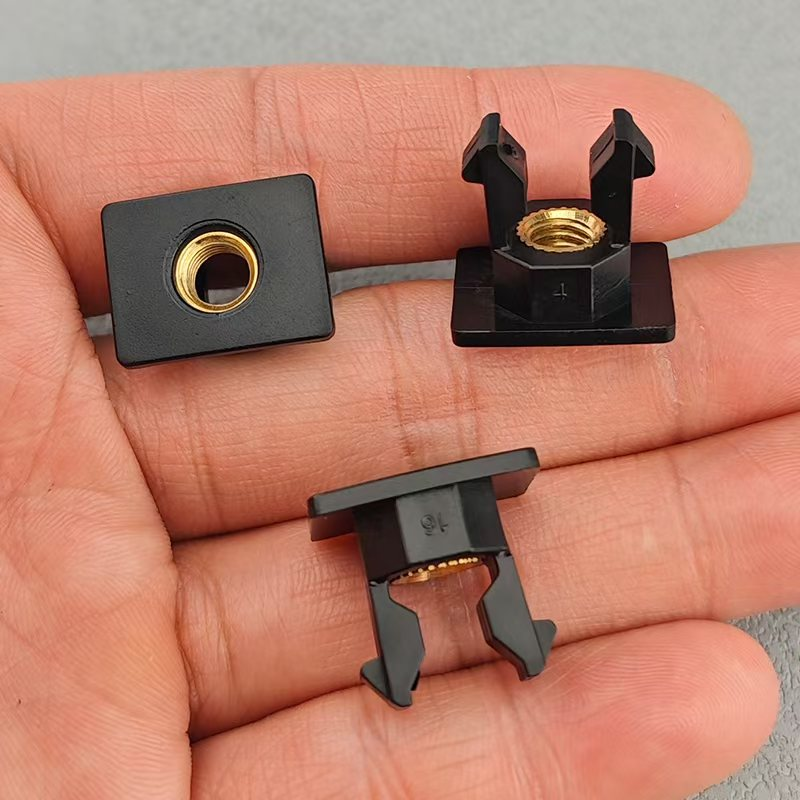
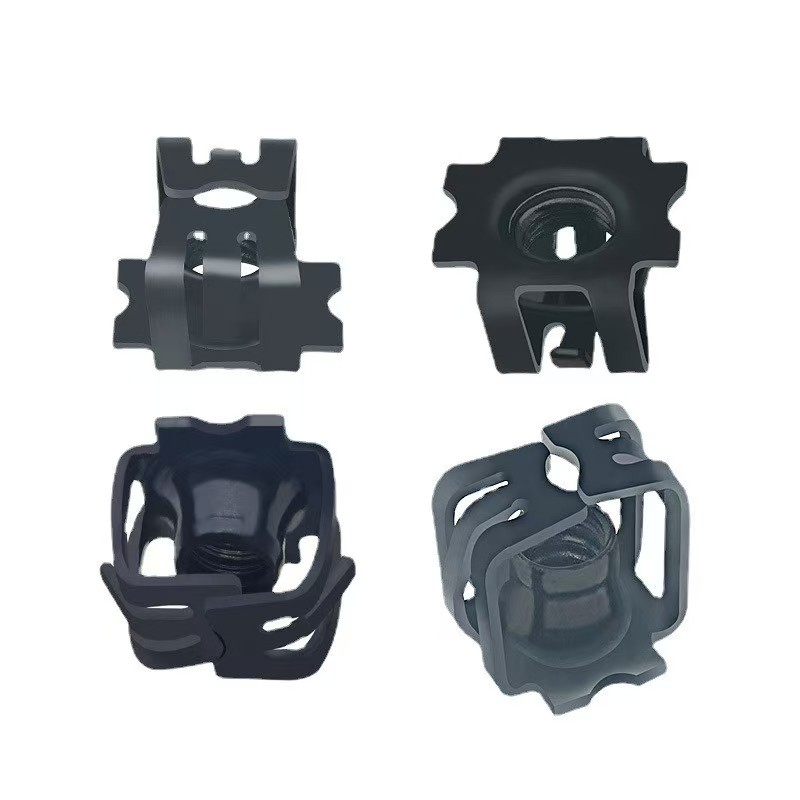
A prime example of this material in action, as referenced in product specifications, is the PA‑GF60 Plastic Cage Nut (or Clip Nut).
In this application, the elastic plastic housing snaps into a hole in the sheet metal, with a metal nut embedded inside. This design is responsible for bearing the tightening torque while providing positioning, insulation, and vibration damping.
For this use case, the high rigidity of PA66/6‑GF60 ensures that the housing does not deform or creep after insertion, thus providing a lasting clamping force. The material's damping properties help reduce resonance and abnormal noise, enhancing overall vehicle NVH (Noise, Vibration, and Harshness) performance. Furthermore, its hydrolysis resistance ensures that part performance does not degrade sharply in the event of condensation or coolant leakage within the battery pack environment.
Compared to metal stamping and plating processes, injection‑molded PA66/6‑GF60 parts are significantly more cost‑effective for mass production and avoid the environmental pollution and corrosion issues associated with metal.
III. Material Selection Comparison: PA66/6‑GF60 vs. PA6‑GF60
| Performance Dimension | PA6‑GF60 | PA66/6‑GF60 | Impact on Battery Pack Applications |
|---|---|---|---|
| Tensile Modulus | ~19,000 MPa | ~20,000 MPa | Higher rigidity provides more stable support. |
| Hydrolysis/Moisture Resistance | Moderate; Significant strength loss | Excellent; Superior stability | Better performance in high‑humidity conditions. |
| Creep Resistance | Moderate | Excellent | Less long‑term clamping force decay. |
| Heat Deflection Temp. (1.8 MPa) | ~220°C | ~250°C | Better suited for heat accumulation inside packs. |
| Recommended Application | Dry interior brackets | Battery pack brackets, fasteners | Preferred choice for humid/thermal cycles. |
IV. Why Choose NINGBO LOSMAN?
As a one‑stop polymer solutions provider with deep expertise in specialty chemicals and engineering plastics NINGBO LOSMAN TRADING CO., LTD.:
- Professional Technical Support: Our team provides material selection advice, cost optimization, and customized modification services for PA66/6‑GF60, including adjusting flowability, thermal stability, or color (e.g., standard black 9915).
- Trusted Quality System: All products can be supplied with Certificates of Analysis (COA) and Technical Data Sheets (TDS), and we can support third‑party testing as needed.
V. Conclusion and Outlook
As the NEV industry continues to push for enhanced battery safety, longevity, and energy density, material selection is shifting from "generic plastic substitution" to "precision engineering plastic design." PA66/6‑GF60, with its outstanding balance of rigidity, hydrolysis resistance, creep resistance, and dimensional stability, has emerged as a critical material for "metal‑to‑plastic" applications like battery pack floating nut retainers, brackets, and fasteners.
NINGBO LOSMAN TRADING CO., LTD. sincerely invites global NEV component manufacturers and fastener suppliers to contact us for detailed technical data or samples.
FAQ (Frequently Asked Questions)
What is the long‑term operating temperature range for PA66/6‑GF60 material within a battery pack?
The material has a Heat Deflection Temperature (HDT) of approximately 250°C at 1.8 MPa. It can withstand continuous operating temperatures of 110°C‑120°C and higher peaks for short periods. For sustained temperatures above 110°C, we recommend considering higher‑temperature‑grade materials like PPA or PPS.
How does this material solve the problem of "thread stripping" in plastic screw connections?
The material itself is not used to mold threads directly. In applications like the "plastic cage nut," the plastic housing handles clamping, positioning, and insulation. The tightening torque is borne by the embedded metal nut. The high rigidity of PA66/6‑GF60 ensures the housing does not creep or loosen under long‑term vibration.
What are the cost advantages of PA66/6‑GF60 compared to metal stampings?
The advantages are primarily in the lower per‑unit cost of high‑volume injection molding, the elimination of costly and environmentally heavy plating post‑processing, and a weight reduction of 35%‑40%, which improves transportation and assembly efficiency. For complex shapes, injection molding consolidates multiple metal processing steps into one.
Can NINGBO LOSMAN provide custom‑colored PA66/6‑GF60 materials?
Yes. We offer custom color‑matching services based on customer requirements, including standard black (e.g., suffix black 9915) and other RAL color codes. Please contact our sales representative to confirm minimum order quantities (MOQ) and lead times.
How can I obtain the Technical Data Sheet (TDS) and samples for this material?
You can submit your request through the "Contact Us" page on our official website at www.lsmchem.com. We will provide the complete TDS and a COA template within 24 hours and coordinate sample delivery for your testing.
© 2026 NINGBO LOSMAN TRADING CO., LTD. All Rights Reserved.