



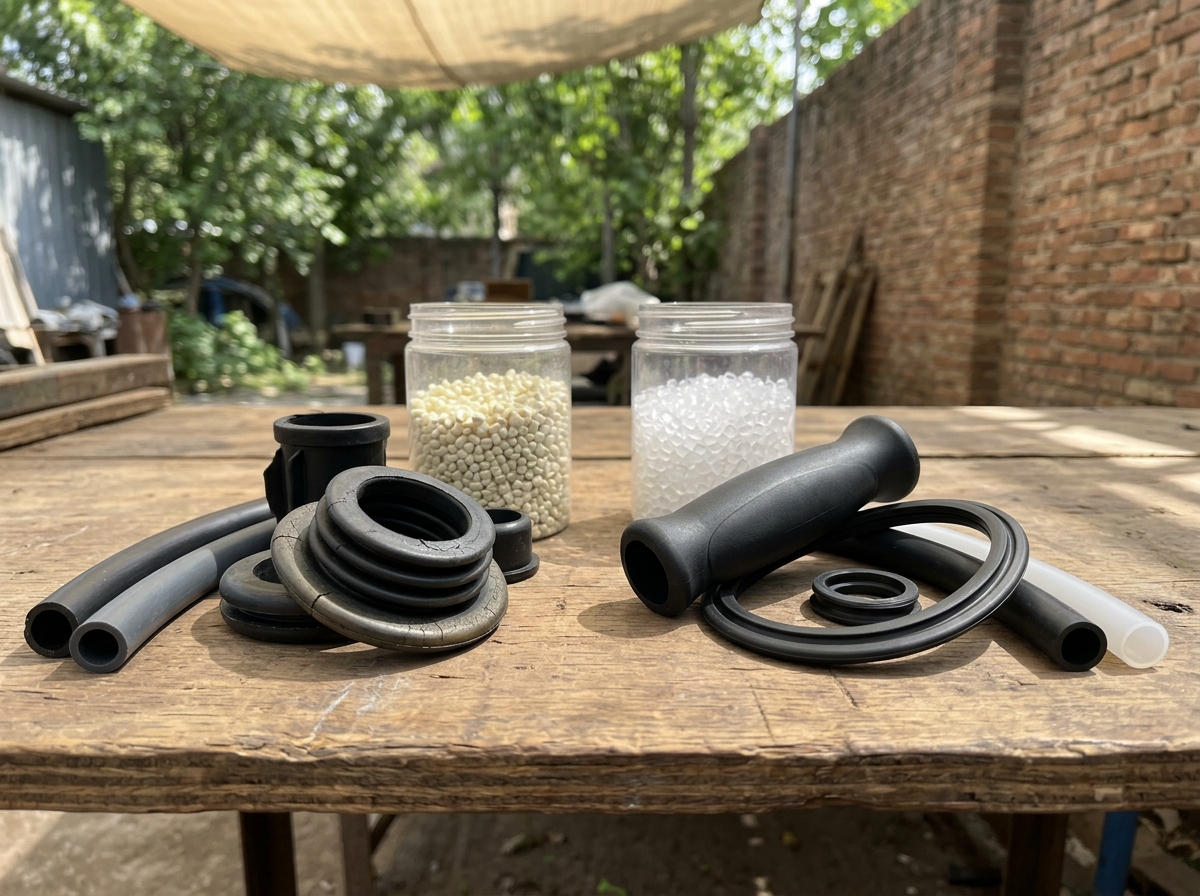

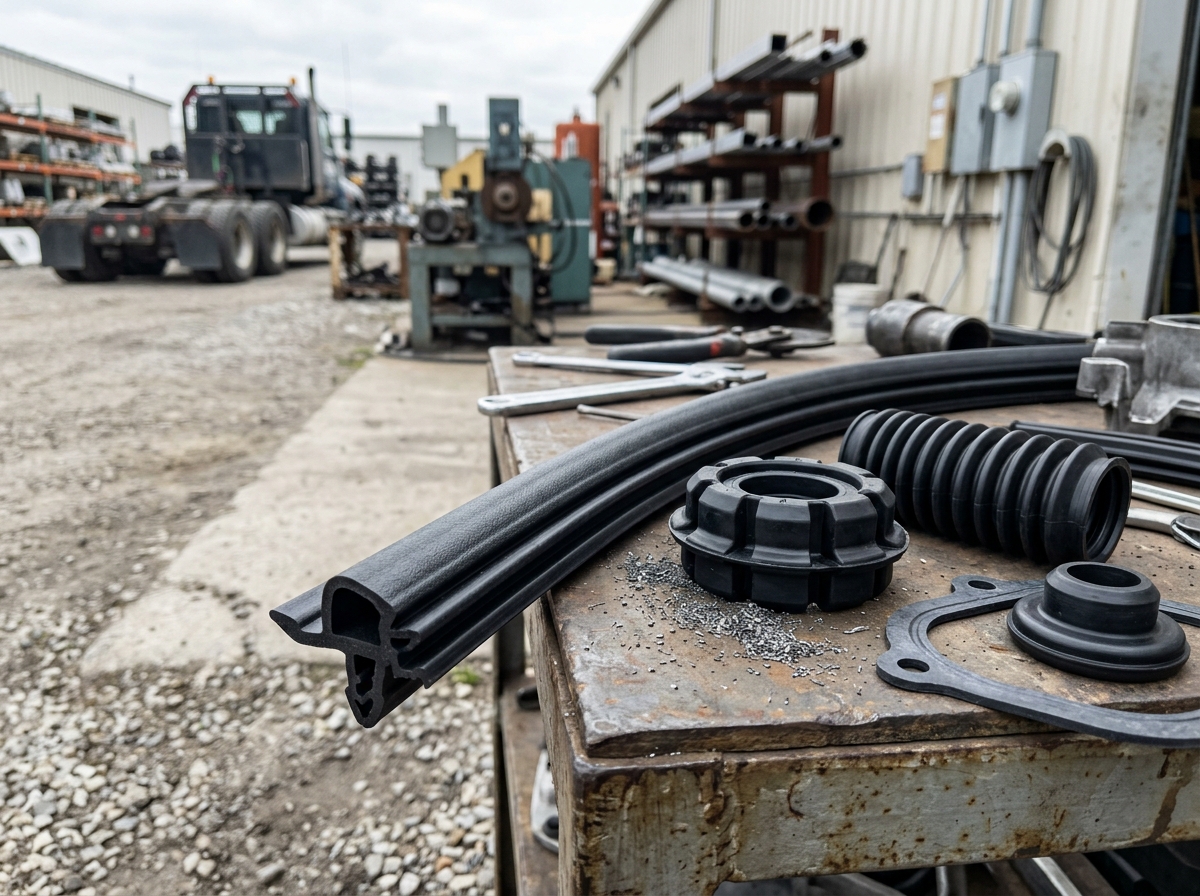

TPV material is ideal for automotive seals and industrial parts because it combines rubber-like elasticity with thermoplastic processability, giving manufacturers a practical balance of heat resistance, weatherability, compression recovery, and high-throughput molding. In real production, that matters more than a single property. Seals need stable sealing force after thermal aging and repeated compression cycles, while industrial parts need dimensional consistency, chemical resistance, and low scrap rates during injection or extrusion. Compared with many conventional TPE options, TPV is often selected when long-term performance, process efficiency, and part reliability must all hold together under automotive and industrial use conditions.
- TPV material is strongest when a part must seal, flex, and recover repeatedly without losing shape.
- Automotive seals benefit from TPV’s heat and weather resistance, especially in dynamic door, window, and fluid-management applications.
- Industrial parts benefit from TPV’s molding efficiency, stable processing window, and resistance to fatigue and environmental stress.
- Selection should be based on hardness, compression set, thermal aging, and the real service environment, not only on cost per kilogram.
TPV material is widely used in automotive seals and industrial parts because it bridges the gap between rubber performance and plastic processing, which is exactly why it fits high-volume manufacturing. For dimensional verification and machine capability in production, many factories benchmark process accuracy using standards such as ISO 20457:2018, while sealing-related performance is often tied to test methods like compression set and thermal aging. In automotive programs, tolerances can be as tight as ±0.005 mm on precision interfaces, and even small variation can affect sealing force, noise, and long-term durability.
Why TPV Material Performs Well in Automotive Seals and Industrial Parts
TPV material performs well because its two-phase structure gives it rubber elasticity with thermoplastic repeatability, which is a valuable combination for molded seals and functional industrial components. Unlike traditional vulcanized rubber, TPV can be processed on standard injection and extrusion equipment, reducing cycle complexity and simplifying recycling of runners and scrap. That manufacturing advantage is one reason TPV is often chosen for automotive weatherstrips, gaskets, bellows, protective boots, and industrial housings that need flexible recovery under repeated loading.
The real engineering value of TPV material shows up when temperature, compression, and weather exposure happen together. Automotive seals may see hot underhood air, cold-start conditions, UV exposure, ozone, and repeated door closure. Industrial parts may face vibration, intermittent oils, cleaning chemicals, and cyclic flexing. In those settings, a material that only feels soft on day one is not enough; it must retain sealing force and geometry after aging.
| Property focus | TPV material | Why it matters for seals and parts |
|---|---|---|
| Processing method | Injection molding, extrusion | Supports high-volume production and short cycle times |
| Service behavior | Elastic recovery, fatigue resistance | Maintains seal contact after repeated compression |
| Environmental resistance | Heat, ozone, weathering | Improves long-term outdoor and automotive durability |
| Typical hardness range | Approx. 40-90 Shore A | Lets engineers balance softness and structural support |
For buyers comparing elastomers, the key question is not whether the part is soft, but whether it stays functional after thousands of duty cycles. That is why TPV material is often evaluated alongside TPU material for wear-focused parts, TPO material for impact-driven interior components, and SEBS material when soft-touch stability and weatherability matter more than structural sealing.
TPV Material for Automotive Seals: What Buyers Actually Need
Automotive seals need stable compression recovery, low noise, and predictable fit across temperature extremes, which makes TPV material a strong candidate. Seals are not judged only by tensile strength; they are judged by how well they keep contact pressure after thermal cycling, door slams, vibration, and seasonal aging. A seal that loses compression set too quickly can create wind noise, water ingress, or increased closing effort.
In practice, automotive engineers often screen TPV material against service conditions rather than a single datasheet number. Door seals, glass-run channels, cowl seals, battery pack gaskets, HVAC sealing strips, and underbody protective components all have different stress profiles. For example, battery enclosures and EV thermal-management zones may prioritize heat endurance and dimensional stability, while exterior seals may prioritize ozone resistance and low-temperature flexibility.
| Automotive seal application | Main requirement | Typical TPV selection focus |
|---|---|---|
| Door and window seals | Noise reduction, compression recovery | Moderate hardness, low compression set |
| Battery pack seals | Heat stability, long service life | Thermal aging resistance, stable geometry |
| Weatherstrips | UV and ozone resistance | Weatherability, surface durability |
| Hose boots and bellows | Dynamic flexing | Fatigue resistance, crack resistance |
One reason TPV material is attractive to automotive buyers is that it can be processed more consistently than many rubber systems in high-volume lines. The US Department of Energy notes that injection molding is well suited to high production rates and can reduce material waste through controlled runner design; this aligns with TPV’s process economics in repetitive sealing components. For reference, the DOE’s manufacturing guidance highlights injection molding as a high-throughput process for thermoplastics and elastomers in mass production, which supports stable unit cost when volumes are large. See U.S. Department of Energy: Injection Molding.
Automotive sealing performance is also tied to test discipline. Engineers often reference aging and material qualification methods such as ASTM D573 for rubber property changes in heat and ASTM D395 for compression set. Even when a supplier does not quote every test result publicly, these methods define how buyers compare candidate materials in a repeatable way.
Why TPV Material Works for Industrial Parts
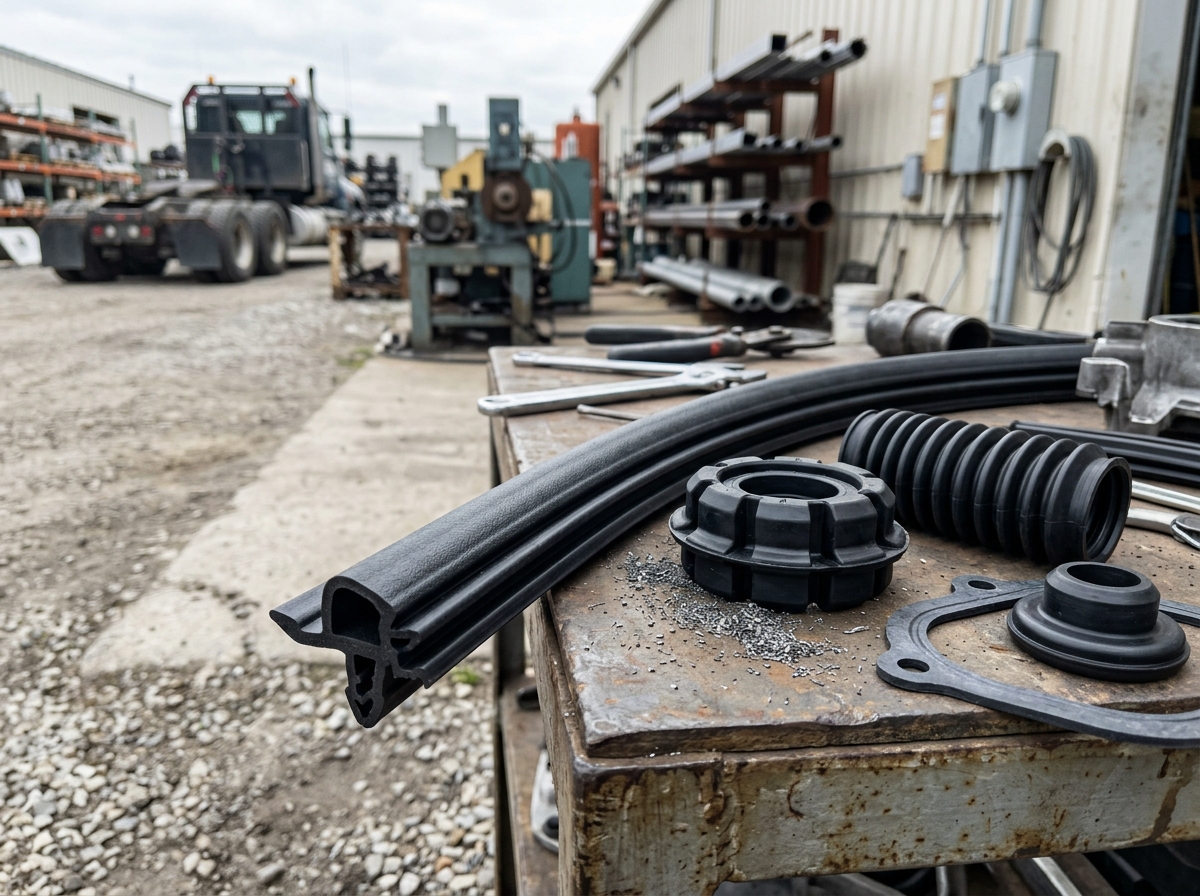
TPV material works for industrial parts because it combines resilient motion with production efficiency, which is essential for components that must be molded reliably at scale. Industrial buyers often need parts that flex, seal, damp vibration, or protect interfaces without adding machining cost. TPV is especially useful in grommets, cable pass-throughs, protective boots, valve seals, edge trims, and machine covers where geometry stability matters as much as flexibility.
Industrial parts are often exposed to mixed stress: vibration, intermittent oil mist, temperature swings, and repeated assembly/disassembly. In those environments, TPV material can outperform generic soft plastics by keeping better elastic recovery after repeated load. This is particularly important when the same part must meet dimensional fit requirements and tolerate maintenance cycles.
The manufacturing advantage is equally important. Because TPV material can be injection molded or extruded, designers can integrate features that would otherwise require secondary assembly, such as lips, ribs, snap features, and sealing beads. That design freedom can reduce part count and lower assembly error risk.
| Industrial part type | Functional challenge | TPV advantage |
|---|---|---|
| Grommets | Cable protection, vibration | Elastic recovery, fit retention |
| Bellows | Repeated flexing | Fatigue resistance, crack resistance |
| Machine seals | Dust and moisture ingress | Compression recovery, stable sealing edge |
| Protective covers | Handling, abrasion, shaping | Formability, process consistency |
Industrial selection should also consider measurement control. In precision production, many companies track dimensional variation with process capability metrics and verify machine performance using standards such as ISO 230-1:2022 for machine tool geometric testing in related manufacturing ecosystems. While that standard is not a TPV material spec, it reflects the level of control industrial buyers expect when the polymer is part of a larger precision assembly.
TPV Material vs Other TPE Families: How to Choose Faster
TPV material is not automatically the right choice for every flexible part, because TPE families are optimized for different use cases. If the application is wear-heavy, TPU often becomes more relevant. If the need is soft-touch weatherable flexibility, SEBS-based systems may be more suitable. If the program is lightweight impact parts, TPO may offer a better balance of stiffness and cost. The right answer comes from matching service environment to polymer behavior.
The easiest way to narrow the choice is to start with the failure mode you most want to avoid. If the part fails by cracking after flexing, focus on dynamic fatigue and low-temperature recovery. If it fails by losing shape under heat, focus on thermal aging and compression set. If it fails by surface wear, choose a material family with higher abrasion resistance. This decision logic is more reliable than selecting by general category name.
| Material family | Main strength | Best fit | Typical trade-off |
|---|---|---|---|
| TPV | Heat, weatherability, dynamic fatigue | Automotive seals, industrial sealing parts | Not always the softest surface feel |
| TPU | Abrasion, oil resistance, toughness | Wear parts, protective sleeves | Can be less cost-efficient for pure sealing |
| TPO | Lightweight impact and cost balance | Interior/exterior trim, general industrial parts | Less seal-specific recovery than TPV |
| SEBS | Soft touch, weatherability | Consumer-facing flexible parts | May need formulation tuning for heat load |
For buyers managing multiple product lines, a structured material portfolio matters. Some suppliers also offer supporting additives such as silicone masterbatch for surface slip and demolding, or foam masterbatch for weight reduction and structural tuning. These are not substitutes for TPV material, but they can improve processing and the final user experience in adjacent applications.
Processing TPV Material: What Makes Production Stable
TPV material is valued in production because it fits existing thermoplastic equipment, which helps manufacturers keep output predictable. Injection molding and extrusion are the dominant routes, and both support scalable manufacturing of seals and industrial profiles. That matters because many buyers do not only purchase a resin; they purchase stable output, lower assembly effort, and fewer rejected parts.
Stable processing depends on three variables: temperature control, shear management, and mold or die design. If melt temperature is too high, some materials degrade or lose dimensional consistency. If shear is poorly controlled, surface quality and sealing geometry can vary. If the tooling is weak, even a strong TPV material can produce poor fit. The material and the process must be designed together.
- Keep the hardness target aligned with sealing force, not only with perceived softness.
- Validate compression set after thermal aging, not only at room temperature.
- Check weathering performance for exterior automotive parts and outdoor industrial use.
- Review mold venting, gate design, and cooling uniformity before scaling output.
For quality control, many suppliers and buyers use standardized testing conditions to avoid misleading comparisons. Compression set, heat aging, and tensile properties are commonly compared under ASTM or ISO methods so that one lab’s results can be reproduced in another. This is one reason TPV material is favored by procurement teams that want repeatability across multiple plants or regions.
Quantitative Criteria Buyers Should Ask For Before Approving TPV Material
TPV material should be approved using measurable criteria, because vague claims do not protect a production line. A buyer should ask for the exact hardness range, heat aging data, compression set results, and processing window, then compare those against the real part geometry and service conditions. This is especially important when a seal failure can stop a vehicle build or cause an industrial assembly to be rejected.
One useful benchmark is hardness, usually reported in Shore A for soft sealing compounds. Another is compression set, which indicates how much a material fails to recover after compression and heat exposure. A third is thermal aging, which shows whether the part embrittles, cracks, or changes dimension after exposure. Together, these metrics describe whether TPV material will work in the field, not just on the purchase order.
| Buyer question | Metric to request | Why it matters |
|---|---|---|
| Will the seal keep force? | Compression set | Predicts long-term sealing performance |
| Will it survive heat? | Thermal aging data | Shows retention of properties after exposure |
| Will it fit consistently? | Dimensional tolerance | Prevents assembly issues and scrap |
| Will it process at scale? | Melt flow and molding window | Supports stable, repeatable production |
When the application is regulated or safety-critical, buyers should also ask for verification aligned with recognized methods. For rubber-like materials, ASTM and ISO test methods are a better basis for comparison than marketing descriptions. That is why TPV material evaluation is strongest when it combines practical use cases, quantified properties, and standard test methods.
How to Select the Right TPV Material Grade for Seals and Industrial Parts
The right TPV material grade depends on service environment, hardness target, appearance needs, and production method, not on a single universal formula. A softer grade may seal better in static assemblies, while a firmer grade may hold shape better in dynamic or unsupported profiles. If the part must survive heat and outdoor aging, the formulation should prioritize retention after aging rather than initial softness alone.
A practical selection workflow starts with end-use conditions, then moves to lab validation and pilot tooling. This approach reduces the risk of choosing a grade that looks correct in a brochure but performs poorly in a real assembly. It also makes it easier to negotiate specifications with suppliers because the target is linked to function, not preference.
- Define the part’s failure mode: leakage, deformation, cracking, abrasion, or assembly difficulty.
- Set operating temperature, exposure, and compression requirements.
- Select a hardness band and confirm molding feasibility.
- Run aging, compression, and fit tests before mass production.
- Review batch consistency, delivery stability, and quality documentation.
For global sourcing teams, supply consistency can matter as much as polymer performance. Cross-border buyers often want stable batch-to-batch behavior, predictable lead times, and clear technical communication, because the cost of a delayed seal program can exceed any resin price difference. That is why TPV material selection should include supplier capability, not only material chemistry.
FAQ
Why is TPV material used for automotive seals?
TPV material is used for automotive seals because it offers elastic recovery, heat resistance, and weatherability while remaining easy to injection mold or extrude. That combination helps seals retain fit and sealing force after repeated compression and aging.
Is TPV material better than rubber for industrial parts?
TPV material is often better than conventional rubber when manufacturers want thermoplastic processing, faster cycle times, and easier recycling of scrap. Rubber can still outperform TPV in some specialized conditions, so the best choice depends on temperature, chemical exposure, and fatigue demand.
What hardness range is common for TPV material?
Many TPV material grades fall roughly between 40 and 90 Shore A, depending on formulation and application. Softer grades suit flexible seals, while firmer grades suit parts that need shape retention and structural support.
How do I test TPV material for sealing performance?
Buyers typically review compression set, thermal aging, tensile properties, and dimensional stability using standardized test methods. Common references include ASTM D395 and ASTM D573.
Can TPV material handle outdoor exposure?
Yes, TPV material is often selected for outdoor use because it generally offers better weatherability than many softer TPE options. The exact performance still depends on the formulation and the UV and ozone load in service.
What is the biggest mistake buyers make when choosing TPV material?
The biggest mistake is choosing by softness or price alone. A seal or industrial part should be specified by function, including compression set, heat aging, fatigue resistance, and process stability.
When should I consider a different TPE instead of TPV material?
You should consider another TPE when the primary requirement is abrasion resistance, soft-touch feel, lightweight impact performance, or adhesive compatibility rather than sealing durability. In those cases, TPU, SEBS, TPO, or other elastomer families may fit better.